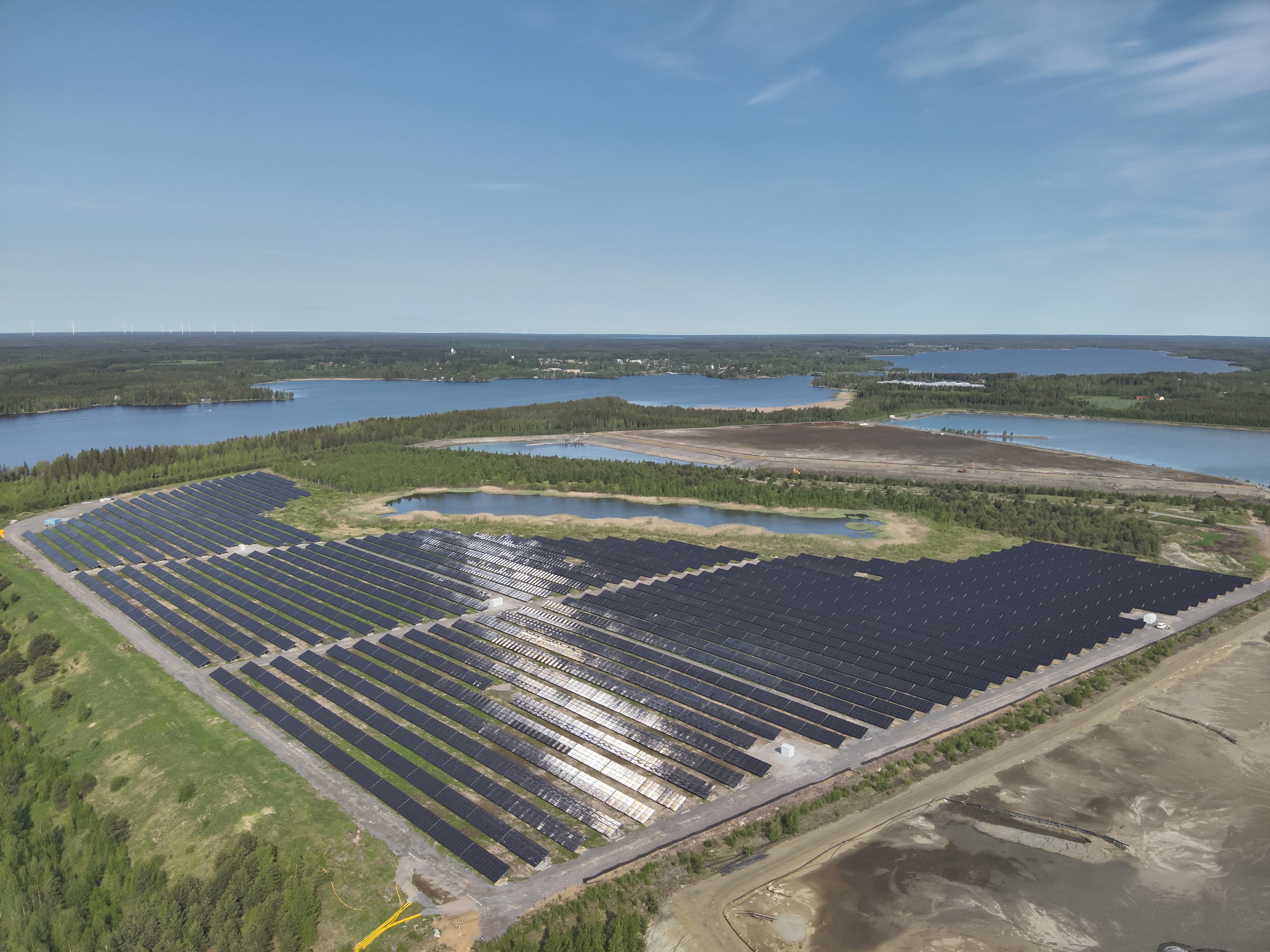
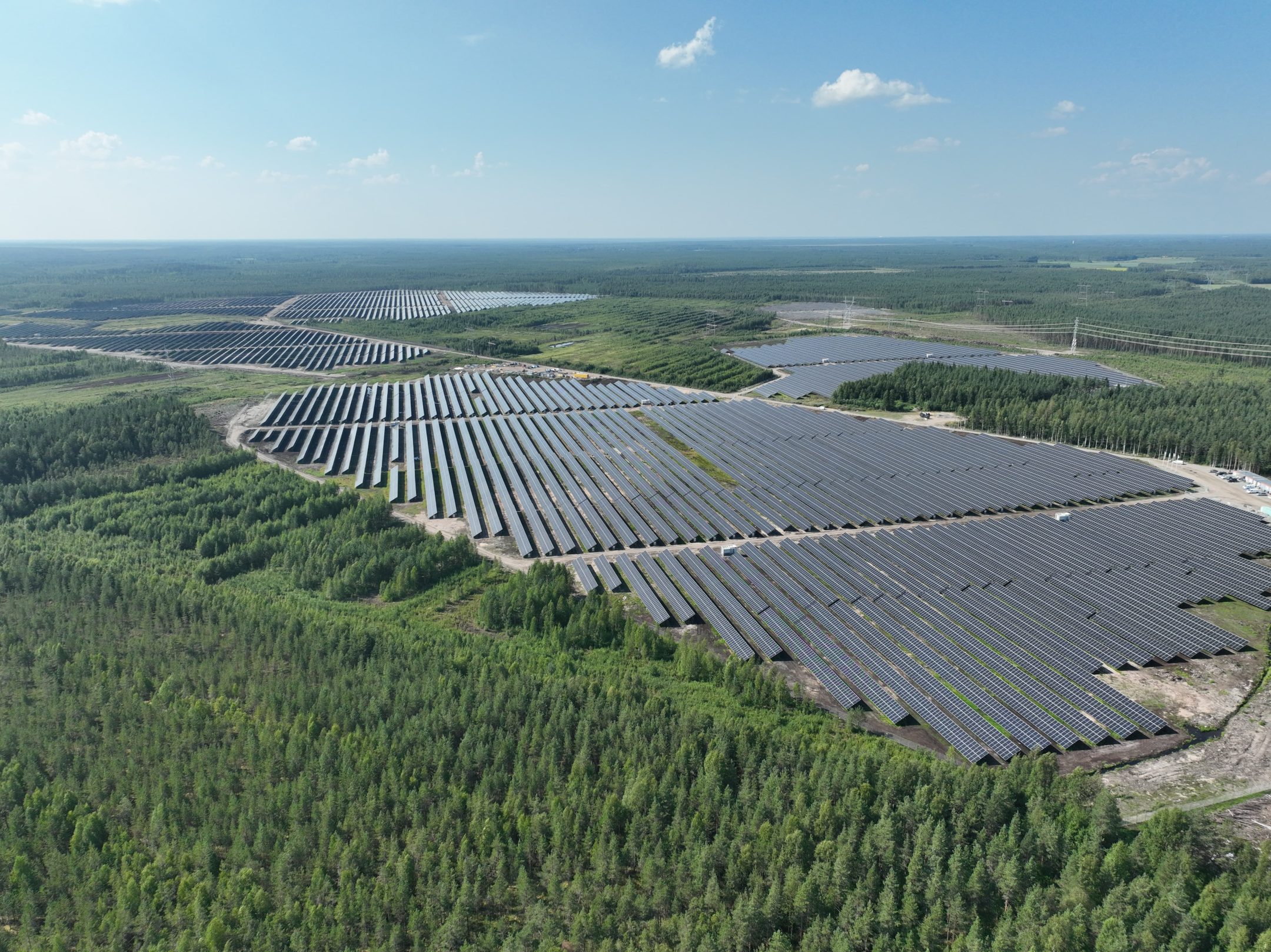
Finland’s second-largest solar power plant is located in Utajärvi, Northern Ostrobothnia. Today, Skarta is celebrating the completion of the solar park in Utajärvi with its partners and stakeholders. A public celebration will begin at Utajärvi Market Square at 5.30 pm.
Built on a decommissioned peat production site, the solar power plant is expected to produce 97 gigawatt-hours of renewable solar electricity annually, corresponding to the annual electricity consumption of approximately 12,000 households. A total of 173,454 bifacial solar panels have been installed across an area of approximately 150 hectares. The 20 MW/40 MWh battery storage facility built in connection with the park complements the solar power plant and increases the flexibility of the energy system.
Solutions emerged through learning by doing
When the Isosuo project was first planned, no one had previously built a solar power plant on a former peat production site. This required new solutions, particularly for the placement of the solar panels and the foundations of the power plant.
Skarta developed and tested different solutions together with its partners. NYAB Finland Oy was responsible for the EPC implementation of the solar park and battery storage facility.
“There was no ready-made playbook for building Isosuo, because one did not exist. The project required the courage to invest in something new, as well as the ability of everyone involved to learn by doing. The Isosuo solar park has been a major undertaking for Skarta,” says Ville Ojanen, CEO of Skarta.
The project progressed from the investment decision to handover in less than three years. The investment decision was made in December 2023, and construction began in early 2024. The first section of the park was connected to Fingrid’s transmission grid in May 2025, when electricity production also began. The second section was connected to the grid in spring 2026. Since then, the entire park has been generating electricity. The solar power plant was handed over to Skarta in summer 2026 and is now technically complete.
Clean electricity strengthens Finland’s industrial competitiveness
Industrial electrification and new investments are increasing the demand for clean electricity. Industrial-scale solar power plants such as Isosuo increase the supply of renewable electricity, strengthen energy self-sufficiency and improve Finland’s ability to compete for new industrial investments.
“The availability of clean electricity affects where investments in hydrogen plants, data centers and electrifying industries are located. We want to ensure that Finland is among the countries selected for these investments,” says Ville Ojanen. “We are a partner in the electrification of Finnish industry.”
Skarta offers electricity generated at Isosuo to companies under long-term power purchase agreements, or PPAs. The battery storage facility enables electricity storage and supports the balance of the electricity system as production and consumption fluctuate.
The transformation of Isosuo makes the Finnish energy transition visible in an exceptionally concrete way. Peat was previously extracted from the site. Today, the same area produces renewable solar electricity.
This transformation could not have been achieved by one company alone. The Municipality of Utajärvi and Utajärvi Business Park have worked systematically to create the conditions for clean energy investments and new industry. The cooperation has been characterised by active business policy, smooth dialogue and the courage to seize new kinds of opportunities.
“I would like to thank the municipality and residents for their courage and open-mindedness. Enabling clean energy investments is one of the most significant climate actions a small municipality can take.”